
Blog - AI in Business
AI Agents or Just Workflows? A commentary on SAP’s recent differentiation
There is a fundamental difference between automated routines and intelligent agents.
Recognizing this distinction is crucial if we want to move beyond hype and create AI that delivers real value in complex, unpredictable environments.
Artificial intelligence has become one of the most overused buzzwords of our time. Hardly any company resists stamping “AI-powered” on its slides, press releases, or product websites. Yet the more often the term appears, the less clear its meaning becomes. Is there truly intelligence at work every time we hear “AI”? Or are we collectively hypnotized by a label, while the reality behind it often amounts to nothing more than old technology in shiny new packaging?
SAP recently made a statement that almost slipped under the radar but deserves attention. In an interview, the company emphasized: “We have announced 40 agents here, real agents, not workflow.” At first glance, it seems trivial. In reality, it is a much-needed wake-up call. Not everything that automates is an agent. And not every automation deserves to be called intelligence.
Workflows Are Useful – But Not Intelligent
Workflows are not the enemy. For decades, organizations have relied on them to gain efficiency. A form triggers a notification, a rule reroutes a ticket, an automated process pushes work along the line. These mechanisms are stable, reliable, and productive.
But they are also predictable, rigid, and bound by rules. Workflows do exactly what they were told to do—no more, no less. Once reality diverges from the script, the system falters. There is nothing “intelligent” about this, no matter how much marketing gloss we put on it.
Agents Think, Workflows Obey
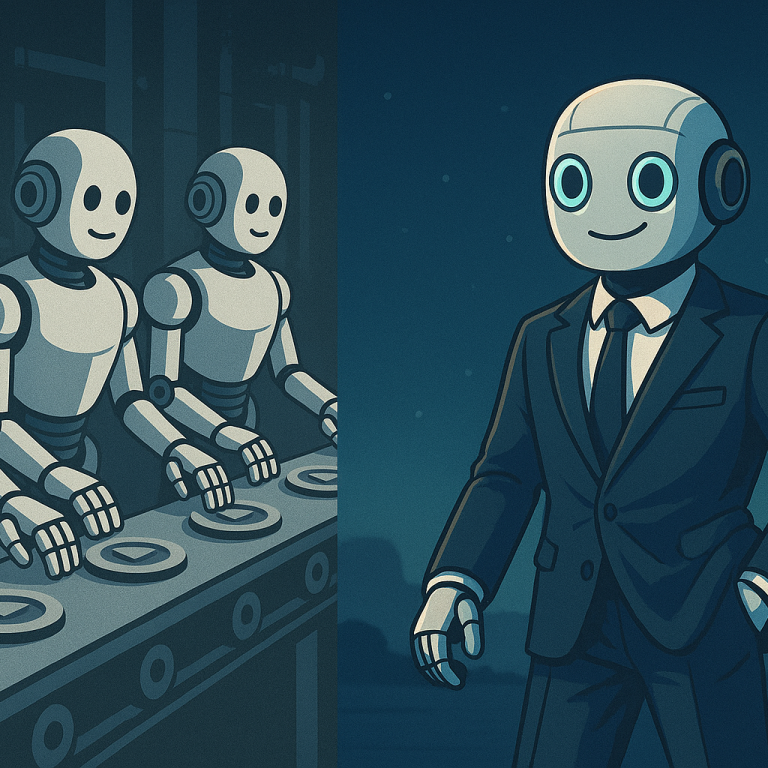
A true agent, by contrast, must be something else entirely. An agent is not just a string of if–then rules disguised as novelty. It must demonstrate decision-making that goes beyond the obvious. It must recognize context, integrate information from different sources, and improvise when the unexpected happens.
An agent adapts. It can act autonomously in dynamic environments, rather than waiting for a programmer to dictate every move. It interacts—with humans, with systems, with other agents—rather than simply reacting. Where workflows obey, agents negotiate. Where workflows execute, agents decide.
The Dangerous Spell of AI Hypnosis
The difference matters. When organizations call every automated process “AI,” they set themselves up for disappointment. Employees expect intelligence, but they get only rigid scripts. Investors expect breakthroughs, but they get rebranded macros. Customers expect transformation, but they get warmed-over routines.
This is the danger of AI hypnosis: inflated expectations, inevitable disillusionment, and ultimately, erosion of trust in technology. Even worse, the illusion of progress prevents us from investing in real progress. If a company convinces itself it is already “AI-driven” while it is merely automating, it never confronts the deeper questions. What does it mean to build systems that truly learn? How do we handle uncertainty and unpredictability? How do we create trust in decisions that are not hard-coded but emerge dynamically?
Buzzwords Don’t Build the Future
Honesty must come first. If we call something an agent, it should behave like one. If we invoke intelligence, it should involve more than deterministic rules. That requires clarity of language, realistic expectations, and courage to admit when something is “just automation.”
The future belongs to intelligent systems that go beyond workflows. But as long as we crown every process as an “agent,” we are fooling ourselves. We mistake motion for thought, hype for progress, and labels for breakthroughs.
SAP’s Warning Shot
SAP’s recent remark is therefore more than corporate modesty. It is a necessary act of differentiation. By admitting that not every automation is AI, SAP has done what too few are willing to do: confront the industry’s addiction to buzzwords. It may be uncomfortable to admit that some expectations are overhyped, but it is far more damaging to perpetuate illusions.
The debate around AI needs fewer slogans and more substance. We should stop letting ourselves be blinded by shiny labels and instead ask the harder questions: What truly makes a system intelligent? Where does it create new possibilities for people and organizations? And where are we simply playing semantic games that waste resources and stall transformation?
Time to Break the Spell
Not every automation is an agent. Not every process is intelligent. And not every promise deserves the name of progress.
It is time to break the spell. The future will not be built by hypnosis, but by clarity. Only when we dare to distinguish between hype and reality will artificial intelligence deliver on its promise—not as a marketing slogan, but as a genuine transformation of how we work, decide, and create value.